

Art is one of the most direct ways visitors meet contemporary Inuit culture in Nunavut. Carvings, prints, wall hangings, jewellery and clothing are made in communities across the territory, and for many families art is an important part of household income. Buying a piece can be a lasting memory of your trip and real support for the person who made it, as long as you know what you are looking at, where it comes from and how to bring it home. This guide covers the practical side, from choosing a piece to packing it for the flight south.
What kinds of Inuit art you will find
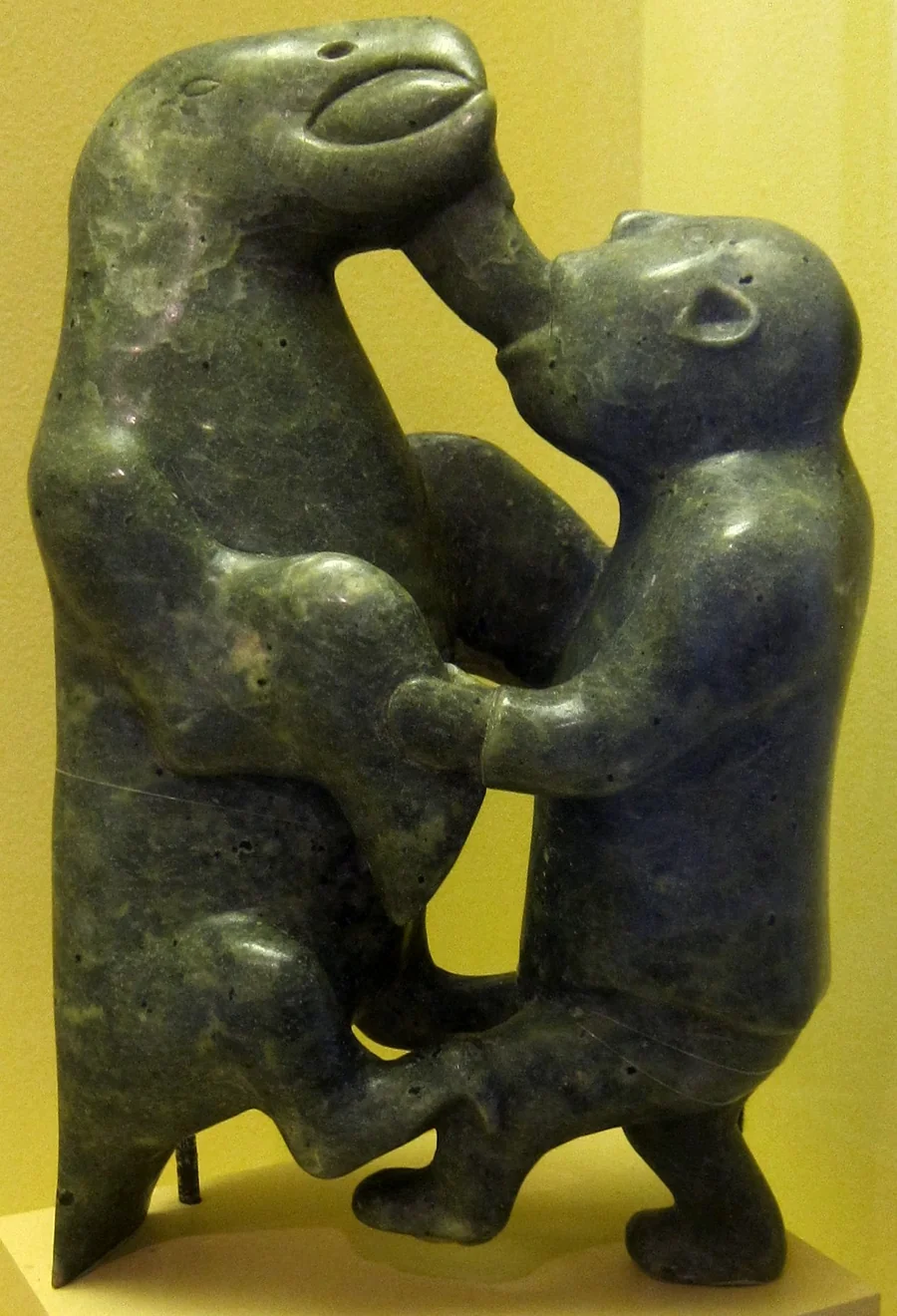
Stone carving is the form most visitors recognise first. Carvers work in serpentine, soapstone, marble and other local stone, and the subjects range from animals and hunters to drum dancers, family scenes and figures from legends. You will also see work in caribou antler, bone and, in some communities, walrus or narwhal ivory. Styles vary a lot from place to place, so the community a piece comes from is part of its story.
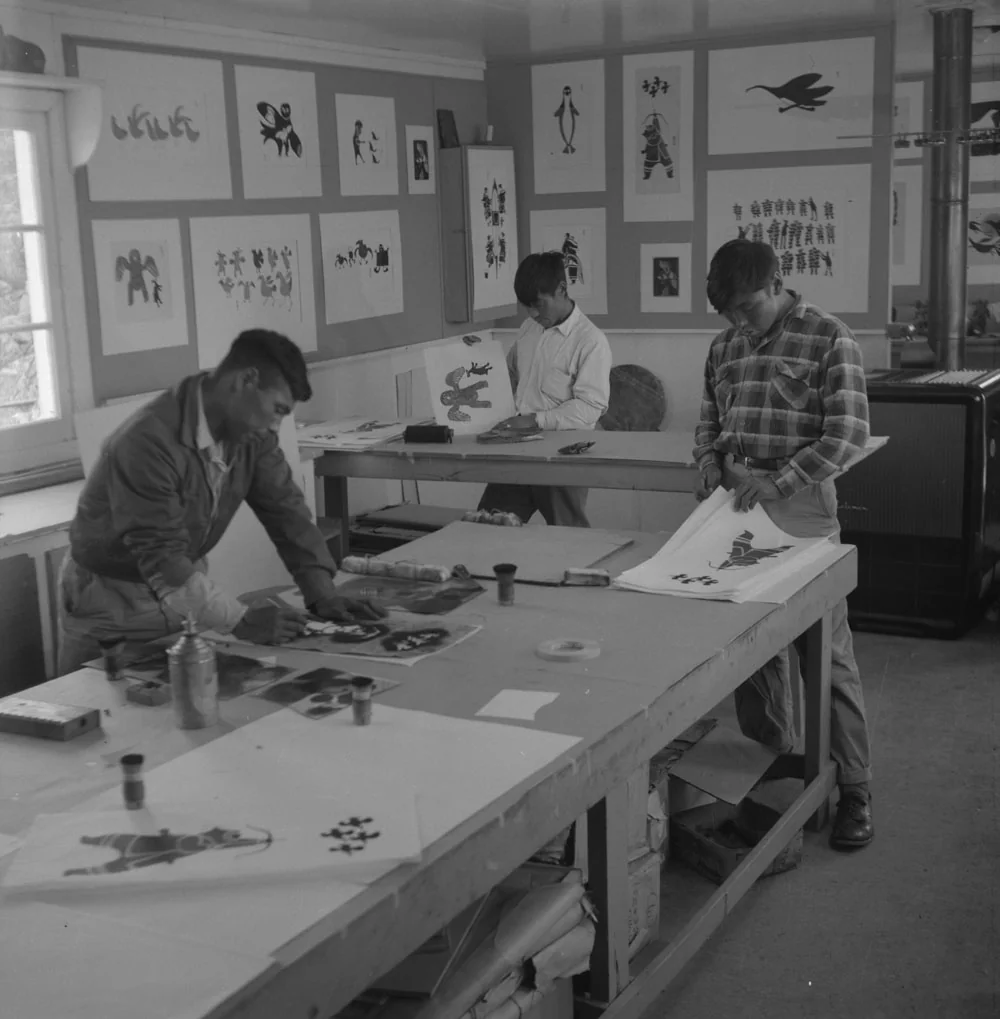
Printmaking has its own strong tradition. Kinngait, formerly known as Cape Dorset, became famous for stonecut prints and lithographs from the late 1950s onward, and its studio has released a print collection almost every year since 1959. Pangnirtung is well known for woven tapestries and prints, while Baker Lake (Qamani'tuaq) is associated with wall hangings made with appliqué and embroidery. Smaller pieces such as beadwork, earrings, dolls, ulu knives and sealskin mitts are often the most practical purchases for travellers with limited luggage.
Where to buy: artists, co-ops and galleries
Many communities have a co-operative store or an arts centre that buys work from local artists and resells it, and general stores in the North often keep a small art section. Larger centres such as Iqaluit also have galleries and gift shops. Buying directly from the artist is common too: carvers and sewers sometimes offer pieces in hotel lobbies, restaurants or at community events. It is fine to look and to decline politely, but treat the offer with the same courtesy you would want for your own work.
Whichever way you buy, a few questions help you leave with a piece you understand:
- Who made it, and in which community?
- What material is it, and where did the material come from?
- What does the piece show, or is there a story behind it?
- Can the seller write the artist's name and community on the receipt?
Most artists are happy to talk about their work, and a short conversation often becomes the best part of the purchase. Cash is still useful in smaller places, since card payments and connectivity are not always reliable.
Authenticity, the Igloo Tag and fair prices
The best-known mark of authenticity is the Igloo Tag, a label created by the federal government in 1958 to identify art made by Inuit artists and managed today by the Inuit Art Foundation. A tag is a helpful signal, especially when you buy far from where the piece was made. Not every genuine piece bought directly from an artist carries one, though, so the artist's signature (often written in syllabics) and a clear receipt matter as well.
Imitations are mostly a problem in the South, where mass-produced figures in an "Inuit style" are sold as souvenirs. Cast resin usually feels lighter and warmer than stone, and every copy looks identical; real carvings are heavier, cool to the touch and show the marks of hand tools and polishing. If something feels too cheap or too uniform, ask before you buy.
Prices reflect hours of work, the cost of materials and the high cost of living in the North. Hard bargaining is not part of the culture around art sales, and a fair price is part of respectful travel. If a piece is outside your budget, a smaller work by the same artist is usually a better choice than pushing the price down.
| Type of work | What to look at | Travel note |
|---|---|---|
| Stone carving | Weight, tool marks, signature on the base | Heavy and fragile at thin points; pad well |
| Antler or bone | Natural grain, hand finishing | Whalebone may face import rules abroad |
| Ivory | Species, paperwork from the seller | Export permits and bans are common |
| Prints and drawings | Edition number, studio and artist marks | Keep flat in a folder or tube |
| Textiles and sewing | Stitching, materials, maker's name | Roll rather than fold tightly |
Ivory, fur and materials with extra rules
Inuit artists can legally make and sell work from marine mammals such as walrus, narwhal and seal, and from polar bear. Taking those items out of Canada is a separate question. Narwhal and polar bear are listed under CITES, so an export permit may be required, and the United States restricts the import of most marine mammal products. Some markets, including the European Union, accept seal products from Inuit hunts only with recognised documentation.
Rules change and differ from country to country, so check with your own customs authority before you buy, not after. Ask the seller whether a permit is needed, keep every receipt and keep the paperwork with the piece. Travellers who stay within Canada usually face fewer restrictions, but it still makes sense to keep the receipt in your carry-on.
Getting your art home in one piece
Stone looks solid, but carvings break easily at thin points such as ears, tusks, harpoons and outstretched arms. Ask the seller to wrap the piece, add your own clothing as padding and carry small works in your hand luggage when possible. Northern flights often use smaller aircraft with strict weight limits, so check baggage allowances before buying a large carving. For heavier pieces, shipping by post from the community with insurance is often easier than carrying them through several connections.
Prints and drawings should stay flat and dry; a rigid folder or a tube protects them on the way home. Wall hangings and garments travel well rolled in a soft bag. Once home, keep stone out of direct heat sources and dust it gently rather than washing it.
A carving or print bought with some care carries more than its shape: it holds the name of the person who made it and the place where you met them. For more on travelling well in the North, read our notes on visiting Nunavut communities with respect, and start with the step-by-step trip planning guide if your route is still taking shape.